Health & Midlife
‘We Don't Want to Just Get Older, We Want to Thrive:’ A Woman’s Guide to Healthy Aging
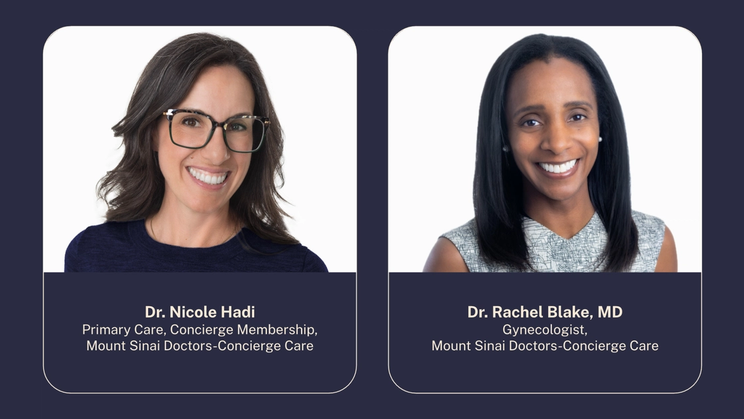
At a recent Chief event, Mount Sinai physicians Dr. Nicole Hadi and Dr. Rachel Blake broke down what to prioritize for your health in your 30s, 40s, 50s, 60s, and beyond.
·7 min read
Your body doesn't hand you a roadmap for healthy aging.
But the good news is, most of the common health issues women in the United States experience are preventable or manageable, and there are steps you can take in your 30s and 40s to meaningfully lower your health risks in your 50s, 60s, and beyond.
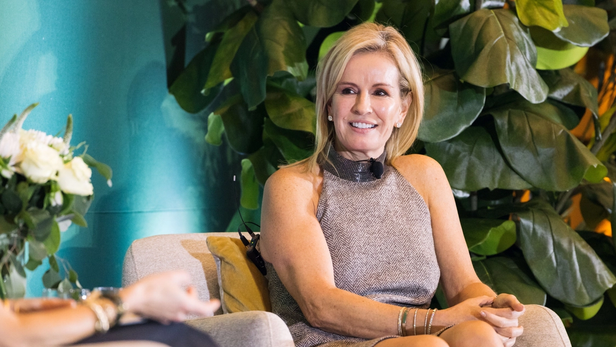
Mount Sinai physicians Dr. Nicole Hadi and Dr. Rachel Blake joined Chief Members for an event last month to offer a decade-by-decade breakdown of what’s actually happening to your body as you age, and what you can do to support long-term wellness and vitality.
Here are some of their top recommendations.
30s: Build the Foundation
In your 30s, you're moving up in your career and may be caring for children or aging relatives. The stress of being in this sandwich generation can impact your sleep, your menstrual cycle, and your eating patterns. This decade also brings natural changes to your metabolism. Establishing healthy lifestyle habits will help carry you through the years to come.
Understand your cardiovascular risk factors
Get a baseline reading of your blood pressure, heart rate, and cholesterol levels to know where you stand. Additionally, pay attention to any diagnoses you receive during pregnancy, postpartum, or while trying to conceive: “If you've dealt with preeclampsia, gestational hypertension, or gestational diabetes, those are some risk factors that may carry through to later decades,” says Dr. Blake.
Watch out for changes in your menstrual cycle
Talk to your primary care provider or gynecologist about any changes or potential irregularities. This knowledge can help you determine your risk factors for subsequent decades and, in general, be aware of your fertility.
Invest in cervical cancer prevention
Receive routine Pap smears. If you’ve had an abnormal Pap smear, your gynecologist may recommend more frequent screenings or exams. Both doctors also recommend the TDAP (tetanus diphtheria, pertussis) vaccine and the HPV vaccine, which is approved up until your 40s.
Maintain your muscle mass
Start or continue strength training. “Cardio is great, but what really is going to help build strength, muscle mass, and bone density that will sustain you through the next few decades is going to be weight lifting, weight-bearing exercises, and resistance training,” says Dr. Blake.
40s: Watch for Change
In your 40s, between career demands and caregiving responsibilities, it can be hard to prioritize yourself. Check in on where you are with stress or burnout before they become harder to manage. During this decade, you may also notice that the hormonal fluctuations you experienced in your 30s are starting to accelerate.
Watch for changes in your baseline
Even if you’ve always had normal blood pressure or cholesterol, you may start to see some changes in your 40s that need to be addressed with your doctor to help prevent long-term cardiovascular disease, according to Dr. Hadi.
Start mammography
The current guideline is to go for annual mammograms starting at age 40 if you are of average risk. If you have a family history of breast cancer or other known genetic concerns, talk to your doctor about how that impacts your screening.
Screen for colon cancer
Start at 45. While other screening tests are available, Dr. Hadi says colonoscopy remains the gold standard: “It is the only screening that we have that can, at the exact moment of the test, actually identify precursors to colon cancer, polyp, and remove it.”
Pay attention to perimenopausal symptoms
Menstrual changes in your 40s vary from person to person, but talk to your doctor if you’re experiencing symptoms of perimenopause. “We are in an age where there is more treatment available and more widely used treatment for perimenopausal symptoms. So keep that as an open line of communication with your provider so you can get the help that you need,” says Dr. Hadi.
60s: Sustain & Thrive
Your 60s are when all of the work that you've done in your 20s, 30s, 40s, and 50s really start to pay off. The goal is just to try and keep it up as much as possible for as long as possible, says Dr. Hadi. Healthy aging in this decade is about preserving your mobility, maintaining your independence, focusing on your cognitive health, supporting your mental sharpness and memory, and keeping your social connections.
Catch up on any immunizations you’ve missed
By the time you’re in your 60s, you should have received your shingles vaccine, as well as a dose of the pneumonia vaccine. “These are really important to helping to prevent chronic illness down the road that can have a very debilitating effect,” says Dr. Hadi.
Focus on fall and osteoporosis prevention
A fall can be devastating, especially if you have osteoporosis, which can lead to a fracture. Continue going in for bone density tests. Focus on core and balance exercises to help to reduce falls. And, if you’re experiencing a lot of knee or hip pain that’s slowing you down, talk to your provider. “The most important thing is really being able to maintain your exercise and your mobility,” says Dr. Hadi.
Talk to your provider about changes in the pelvic floor
It may be uncomfortable to discuss changes in your urination, bowel habits, or vaginal canal, but it’s important to bring them up anyway. For example, postmenopausal bleeding can happen. “It is not uncommon, and it's usually not something very concerning,” says Dr. Hadi. “However, it is never something to ignore.”
Watch for issues with your cognition
Bring up any changes to your memory or cognition to confirm what you’re experiencing is age-related. Your doctor can also suggest some strategies for maintaining your sharpness. Staying as physically and socially engaged as possible can also help support healthy cognitive aging. According to Dr. Hadi, “the biggest thing that is recommended for the prevention of dementia in terms of what we have control over is keeping physically, mentally, and emotionally active.”
Healthy aging looks different for everyone, and we all have different goals. But in general, “we don't want to just get older,” Dr. Hadi says. “We want to thrive.”