Job loss today is rarely about performance — not in a market that counts “AI washing” and “forever layoffs” among its current buzzwords.
And yet, for many women leaders, saying “I got fired” publicly is still a subversive act.
That’s what Laura Brown and Kristina O’Neill realized after being fired from their own Editor-in-Chief roles at InStyle and WSJ. magazine. Now, they’re on a mission to open up the conversation.
“Growing up, I certainly didn't know any women who had been fired who had talked about it, but I knew Steve Jobs had, and I knew Mike Bloomberg had, and that was part of their narratives in major ways,” O’Neill told Chief Members when the pair sat down for a conversation with Chief CEO Alison Moore, “Why is it the thing that made them cool? Where are the women talking like this?”
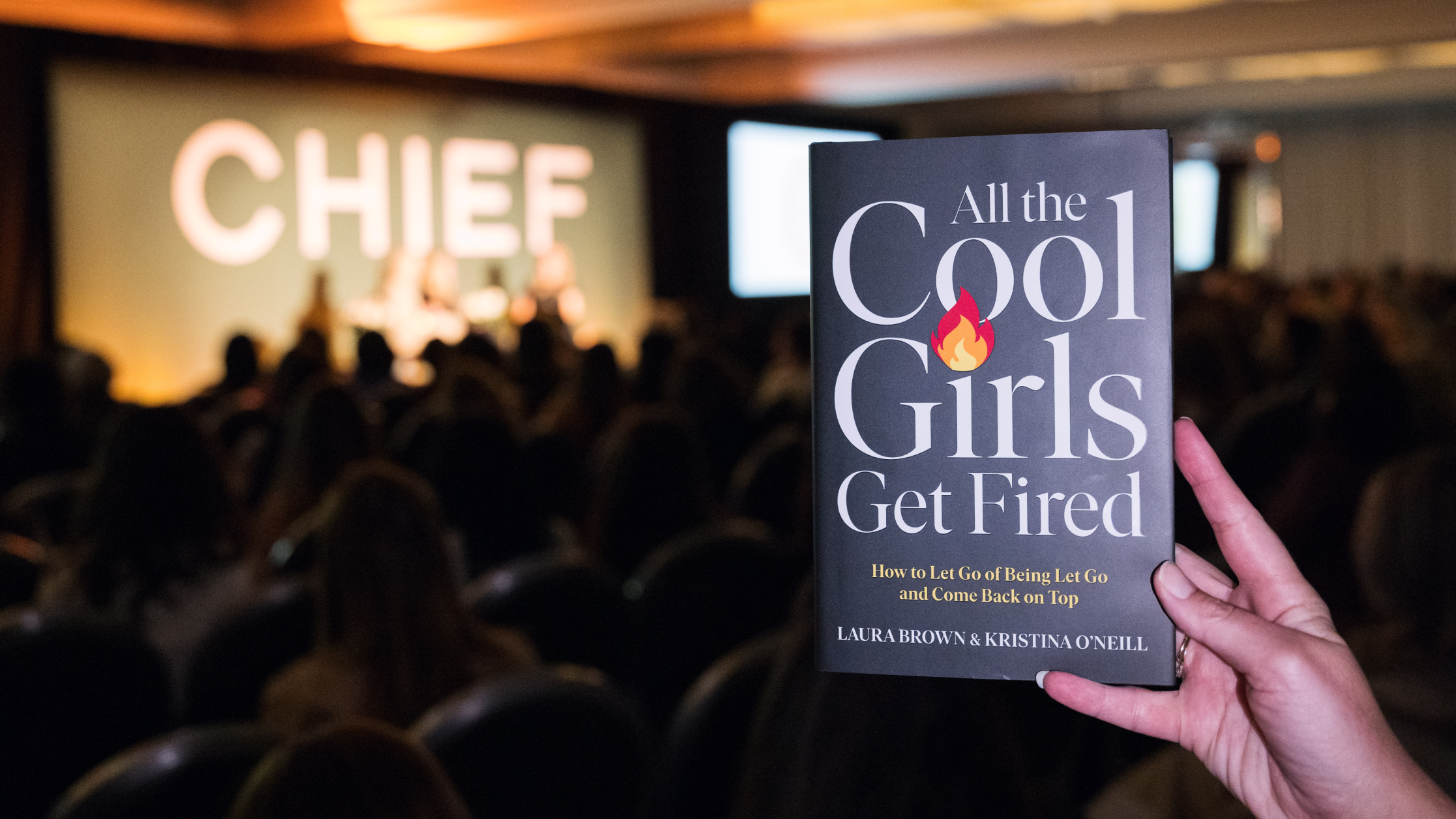
With their book, All the Cool Girls Get Fired, and new weekly briefings, Brown and O’Neill are arming women with the knowledge they need to navigate the practicalities of job loss, reclaim their narratives, and come out stronger on the other side.
Here are six of the top tips they shared with us for embracing change and redefining your career on your own terms.

1. Don’t say ‘let go’ or ‘laid off,’ say ‘fired’
Brown: “‘Let go’ sounds like you're kissing someone goodbye before they get in an Uber. ‘Fired’ feels like ‘fired.’ There is some severeness to it, but there is some swag to it. That's why we co-opted it, and we encourage you to get rid of that discomfort and spin. It doesn't serve you really… that honesty is going to propel you, you know, more than any other special word.”
2. Do math for your dreams
Brown: “We have this brilliant advice from Ron Lieber, who's the Your Money guy for The New York Times. He says, ‘We all have a beat when we're fired. Take a beat to think about what made you more happy and less happy over the course of your career. What can you do going forward to increase the happiness and decrease the unhappiness?
“We call it math for your dreams… Circumstantially, and the great majority of everyone in this country needs a job the day after, but it's just firing up that little pilot light.”
O’Neill: ‘When you're forced into something, you are able to sort of ask yourself, ‘But, did I really like doing that?’”
3. Rest, but don’t retreat
O’Neill: “There are a lot of stages to (job loss). It is a grieving process. When I ended up leaving the Wall Street Journal, it was June, and I took the summer off. I did give myself three months where I wasn't pressuring myself to have that job in hand by September. I sort of said, ‘I will come back in September, and that's when I'll hit the ground running and take all the proper meetings.’”
Brown: “You have to listen to your body and what your comfort level is, but there's little things you do to build up your own strength. It could be managing your damn cable bill. It could be doing so many different things. Focus on that and there's all those things that you can do that are smaller that actually give you real agency during this time.”
4. Work is no longer linear: Think about your transferable skills
Brown: “We were conditioned to want the corporate corner office, and it's like, hang on, what if that isn't the goal? Why is that the sanctioned goal for me? Media has been a fascinating bellwether for all of this splintering, because so many people have been fired from legacy media, print, whatever, have started their own Substacks, YouTubes, TikToks. Even if you're not in media, if you make cookies, you can sell them on TikTok. There are whole economies now that are driven by the individual which didn’t exist five years ago.”
“It’s also like, here's the horizon of your industry and here's the horizon beyond that of ways that your skills can apply in ways to make money for yourself, either that they're transferable to other industries that could do with what you do, which we found with our work, or there's something that you can make your own and you can claim your own.”
5. Even if you still have a job, pack your professional ‘go bag’
O’Neill: “I don't think there's a person employed (today) who's not reading the room and looking around and wondering, ‘How is everything going to impact my industry and potentially me personally.’
“I did not have the safety net that I should have had in place, so that was a hard lesson to learn.”
In All the Cool Girls Get Fired, the pair suggest:
- Keeping your resume and LinkedIn profile up to date
- Backing up your contact list
- If you can, setting aside money in an emergency fund
- Understanding what you’re eligible for, including COBRA insurance and unemployment benefits
6. Above all, don’t give up your value
Brown: “Your value is yours, your work is yours, what you've built is yours, you take it, don't give it to them, don't give them the power, be proud of yourself, move on.”