Advancement & Networking
Discernment Isn’t a Solo Act: Why Every Leader Needs a Personal Board of Directors
Even more than the best one-on-one counsel, a circle of advisors can help you turn up the volume on your inner wisdom, says Chief Member Michelle Tafel.

·6 min read
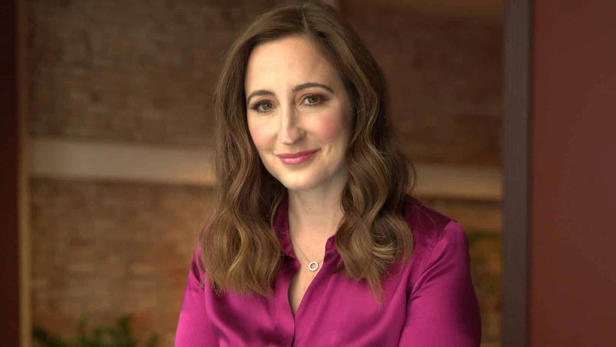
Michelle Tafel, Principal and Managing Director of Strategy & Organizational Effectiveness at DRG, is a nonprofit strategist, executive coach, and member of Chief’s Member Advisory Council.

Sorting through the noise around us to find gems of wisdom is a herculean task in a world where we are inundated by opinions, hacks, and ideas. And yet the single most critical task of leaders is that of discernment.
As leaders, we must discern what the priorities are in the face of ambiguity and mounting pressure. We must discern where to invest our time or budget for the greatest impact. We must discern risk and reward and illuminate the path ahead.
Discernment may feel like an individual leadership responsibility, but our ability to see clearly is shaped by the perspectives, questions, and experiences we invite in. The myth of individualism so strongly pervades U.S. culture that it can be hard to remember that most effective leaders are effective in large part due to the strength of their advisors, confidants, and personal boards of directors. These leaders know where they have blind spots and build relationships with people who will see what they miss, interrogate ideas, and challenge assumptions.
Four years ago, as I made a pivot from nonprofit Executive Director to Principal and Managing Director at DRG Consulting, I found the task of figuring out how I wanted to be in my next chapter exciting and terrifying. Shockingly, I took my own advice — advice I share with my daughters regularly: If the problem feels overwhelming, it’s because the first step is too big. I took small steps that led to big ones and learned much during that transition.
My single biggest win from that period was the investment I made in cultivating and leveraging my personal board of directors.
What a Personal Board of Directors Gives You
A personal board of directors can offer something different from even the best one-on-one counsel. These groups serve as examples and fellow travelers, with scars, and stories, and cautionary tales. They also help you turn up the volume on your inner wisdom with probing questions and honest reflection.
I am fortunate that my personal board of directors comes from two sources: First was my wise, supportive husband who spent hours listening, reflecting, reviewing, and then cutting through my noise with a simple incisive comment, “That doesn’t sound like you,” when I talked about what specifically was attractive to me about an offer I was considering.
And the second was my Chief Core Group, made up of other executive women.
I joined Chief one month before my second child was born and through our Core Group and the coaching that supported it, the group became more than a lifeline for me in a year of transition. They quickly became my role models in leadership, parenting, and navigating this beautiful and confusing world. Their strength, vulnerability, and resolve helped me cultivate courage to center on my own vision for the future. With their support, I navigated (expanded) motherhood, a career pivot, the messiness of grief, and joy of my 40s.
Perhaps most importantly, my Chief Core Group helped me create the conditions to dream and to question long-held assumptions I held about the role of work in my life, like the necessity to choose between being a present mother and being an ambitious executive. Or fit into boxes others have defined in order to succeed. These insights would not have come to me without hours of conversation, joint exploration, troubleshooting, and questioning.
Why a Personal Board Matters
Plenty of us have individual advisors, so what makes a board helpful?
When it comes to organizations, the best boards of directors (whether for a nonprofit or for-profit) seek to recruit for and cultivate diverse viewpoints and experiences, invite debate and collaboration, and yet all focus on achieving the same mission.
And the leaders I admire most build teams of people who complement their strengths and gaps, see what they miss, challenge their assumptions, and bring different experience to the table. They abhor echo chambers.
Once you have experienced a group like this, its value is hard to miss. What makes it magical is the combination of different perspectives and real debate. In one-on-one conversations, we may hear conflicting advice, whereas in a group conversation focused on your challenge, you can hear those conflicting perspectives diverge, converge, and sharpen.
Over time, the people on your board begin to know your patterns. They notice where you stumble, what you avoid, what brings life to your voice, and where and how you may be standing in your own way.
In short, they discern what you can’t see on your own.
Cultivating the Right Group
In my work with nonprofit leaders and as a recovering executive director myself, I have seen these groups of advisors naturally form in the wild. Where they are most successful, they are reciprocal and valuable to each member. They include people with different experiences and perspectives who will ask hard questions and do the work of getting to know you. They will notice your behavior patterns and point them out with love. They will care about you without having a personal stake in the outcome and they will wade into the muddy water with you because that is what this moment requires.
Cultivating a group like this begins with noticing who already plays these roles in your life and where additional perspectives may be missing. It is incredibly valuable to identify members who are not in your organization but who share some context, such as industry, life stage, location, or caretaking role. Asking them what inspires them and trips them up and how they are redefining leadership in this stage are effective ways to dig beneath the surface and begin to see what you may learn from each other.
The Power of Collective Wisdom
In a world where women are redefining what leadership means, we all need the collective wisdom of our personal boards of directors, whether it’s a Chief Core Group or a circle we build ourselves. The value of a personal board is the space it creates to discern more clearly who you are, what matters, and what comes next, especially when the path ahead is unclear.
Related Articles