
Business Trends & Tactics
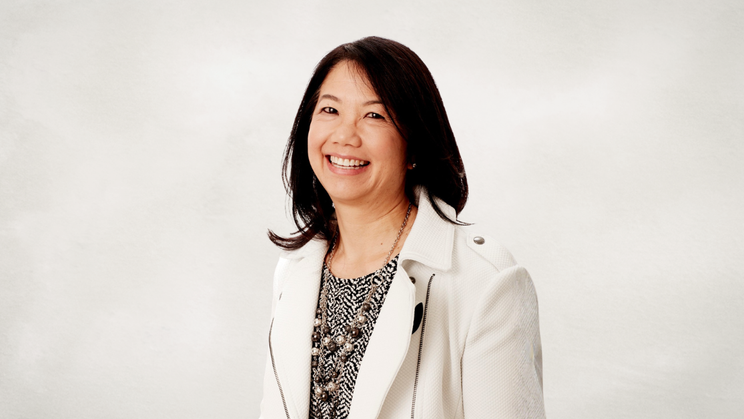
Ellevest CEO Dr. Sylvia Kwan Is Redefining Financial Success for Women
·7 min read
In 2026, women investors are navigating a landscape that’s full of complexity — and potential.
Beyond the volatility caused by geopolitical instability, high interest rates and inflation, and sluggish hiring, the market is undergoing more fundamental changes. By 2048, $124 trillion will change hands in the United States in what’s been dubbed The Great Wealth Transfer, and women will inherit the majority.
They are pursuing new paths to wealth creation, and they’re placing higher priority on their values along the way.
That’s why Dr. Sylvia Kwan and our partners at Ellevest are taking a radically different approach to helping women build and manage their wealth.
Since succeeding Ellevest founder Sallie Krawcheck as CEO last year, Kwan, who is also Chief Investment Officer, is moving the firm’s focus away from the assumption that “more is always better” and toward quality of life.
We asked Kwan about leading Ellevest through this evolution and why the future of investing requires a shift from wealth management to wealthcare. Read on for her insights.
At Chief, we like to quote the saying, 'If you want to go fast, go alone. But if you want to go far, go together.' What role has community played in your career journey?
Transitioning into the sole CEO role during 2025 was a period of profound transition and evolution for Ellevest. In any season of significant change and uncertainty, you inevitably see a shift in the collective. Some people chose to move on because they were uncomfortable with change but others saw change as opportunity. Without the support of the entire Ellevest community, our team, our clients, investors, and supporters, this transition would have been that much more challenging and most certainly, lonely. I’ve gained a fresh appreciation for the importance of Ellevest’s mission, which not only brings our community together but serves as a source of strength and support.
Sallie Krawcheck was such a visible founder and face of Ellevest. How do you balance building on her leadership foundation while also making the CEO role your own?
Sallie is the visionary who built Ellevest and created the voice and brand that has resonated with so many women of all ages and life stages. Her foundation is rooted in the unapologetic belief that “nothing bad happens when women have more money.” I carry that torch forward, but with a focus on wealth management, financial planning, and values-aligned investing as key fundamentals for women as they come into more wealth. The Great Wealth Transfer has the potential to create significant shifts in spending and investing patterns, and Ellevest is at the forefront of supporting women who seek to employ and invest their capital for returns, intention, and impact.
In your 2026 market outlook, you say the financial services industry needs to make a fundamental shift from wealth management to wealthcare — what you describe as focusing on what really matters. What prompted your realization that the industry's focus on optimizing returns was ‘missing the point’?
Our industry is narrowly focused on returns and the belief that higher returns and wealthier clients automatically lead to happier clients. Over the years, we’ve seen among our own clients and the Ellevest community that that isn’t always true. Wealthy clients are still financially anxious, and more money doesn’t ease that anxiety. I saw how helping our clients work through financial decisions and tradeoffs that weren’t the optimized, “correct” solution from a numbers perspective resulted in peace of mind, more joy, and greater mental freedom. Money should be the means to support well-being, not just a tool for generating more money. And if we aren't helping clients solve for quality of life, we’re missing the point.
Women have to consider different factors when it comes to wealth, including career breaks for caregiving, higher healthcare costs, and longer lifespans. How does this wealthcare approach specifically address these challenges in ways traditional wealth management doesn't?
Traditional wealth management has historically defaulted to men’s lives, which tend to be more linear than women’s. For example, men generally have a 40+-year career trajectory, with earnings that move up and to the right. Women’s lives are cyclical and non-linear. Wealthcare considers where women are in their lives and careers, the pressures they face along the way, their longer life spans, and most importantly — what is most important to them now and along the way as things change. Only with these considerations can we align women’s finances to support what will truly make a positive difference in their lives. And the answer is rarely just about returns.
A recent report by How Women Invest and How Women Lead shows that, despite market constraints, women are actively investing in private market opportunities — often for the first time. What needs to happen to open up access to this type of wealth creation to even more women?
Historically, private markets have been accessible to only institutions and the very wealthy. That is no longer the case today. The democratization of private investing has opened up these opportunities to a much wider investor base. The access is there. What we need today is engagement, education, and ways to help investors find and discover the right opportunities. If the opportunities are there but no one knows about them, more women won’t be able to actively invest in them.
At Ellevest, we offer a wide range of private market opportunities — for both returns and impact — to our qualified clients. We source, due diligence, and monitor the investments on our platform, which helps women access them in a thoughtful and financially responsible way. Working with an advisor who continuously sources and vets private market opportunities will help more women access them for wealth creation.
That same report mentioned that 77% of women investors who responded consider investments with a value-based lens, echoing the increasingly values-based approach to career growth we’re seeing among leaders in the Chief community. In your market outlook, you mention a similar trend among Ellevest clients. What’s the first step you’d advise someone to take who wants greater alignment between their values and their personal investments?
The first step is a values exploration and introspection. Getting clarity on what’s most important and meaningful to you and what you care about the most will serve as your North Star with respect to your portfolio. At Ellevest, we often help our clients with this step. You (and your advisor) can then look at your investment portfolio and determine what holdings are consistent with your values and what holdings aren’t. Many people are surprised to find their money is supporting industries and practices they personally disagree with. Remember that you don’t need to change everything overnight — there may be financial implications, such as the impact of taxes to consider, so some shifts may take weeks or even years. Also remember that there is no such thing as the perfect values-aligned investment. A company could be impacting climate change in a significantly positive way and at the same time undervaluing women and diverse teams. The key is first awareness, then intention… as opposed to an afterthought.
Overall, the gender investing gap remains significant. What’s the biggest misconception about women and investing you still encounter and how do you push back?
The biggest misconception is that women are not willing to take risk. Women aren't risk-averse; we are risk-aware. We ask more questions, we trade less impulsively, and we stay the course during market volatility. Women want to understand the full risk picture and its tradeoffs — that doesn’t make us risk-averse. The frustrating result of this misperception is the notion that any service that helps women invest is a lesser service — a man’s version that is made smaller and pinked for women. Why can’t the opposite be true? At Ellevest, we pride ourselves on our investment acumen and the highly differentiated investment strategies in asset classes not often found nor offered at many wealth management firms.