Updating the Leadership Playbook
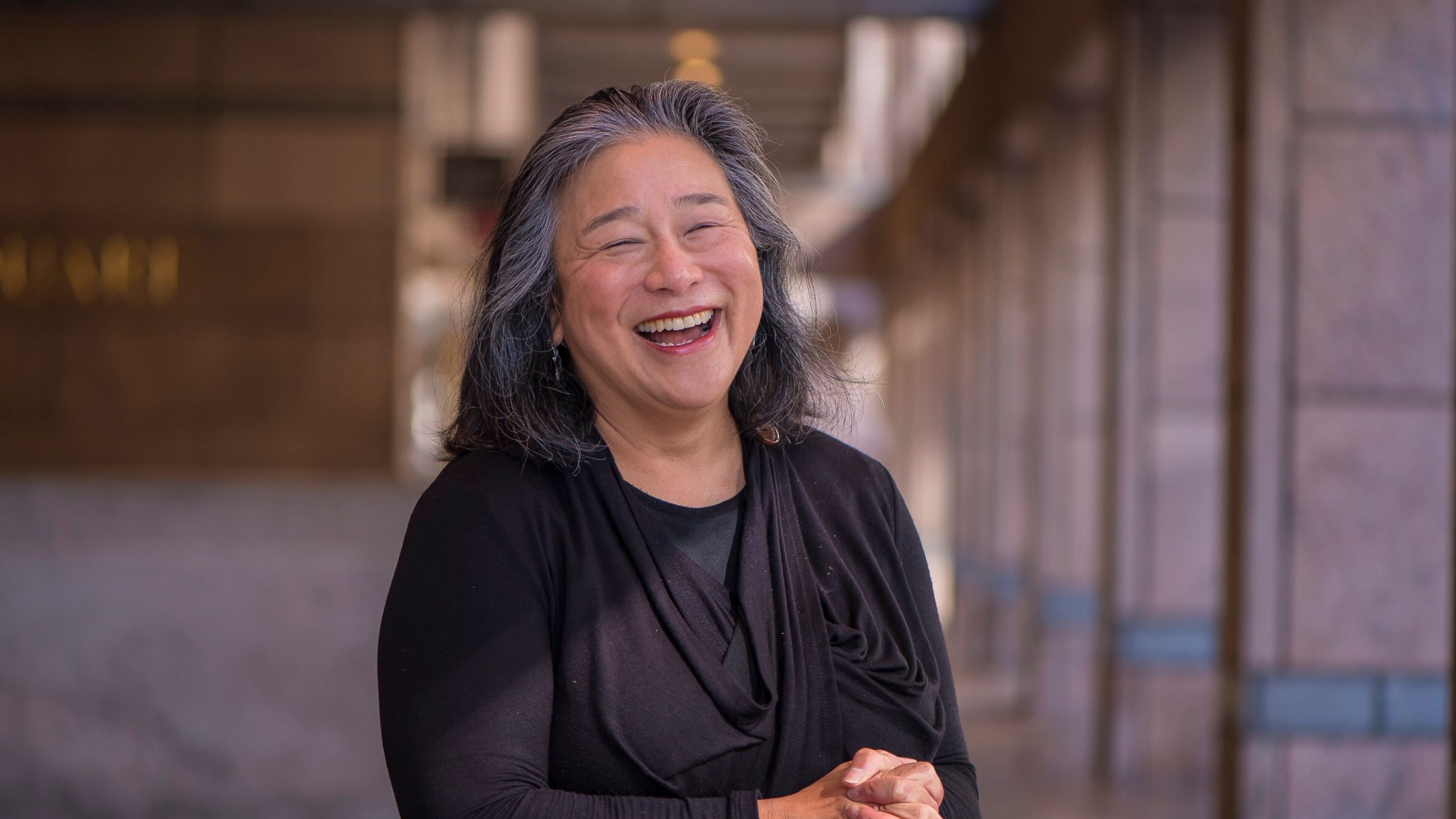
Members: Join us on Thursday, May 14 for our conversation with Tina Tchen on turning influence into impact. RSVP in the Chief app.
Tina Tchen has spent her career creating change in spaces that weren’t designed for it.
For more than 50 years, she’s been a fierce advocate for equity and advancement within some of America’s most rigid institutions, from her early days as a civil rights attorney, to leading the White House Council on Women and Girls, to building the international Girls Opportunity Alliance.
The former Chief of Staff to First Lady Michelle Obama and current Obama Foundation executive, Tchen is often the only Asian American woman in these influential rooms. But she says her upbringing as the daughter of Chinese immigrants in Cleveland, Ohio, helped her develop the resilience to navigate them all with impact.
We asked Tchen, Chief’s 2026 Asian and Pacific Islander Heritage Month keynote speaker, about how women leaders can take a page from her book and create meaningful change at scale, even when the structures around you resist it. Hint: It all comes back to relationships.
Your advocacy for women and girls has been a throughline in your career, from corporate law, to government, to the nonprofit sector. This is a challenging moment for that work, but are there particular areas where you see opportunity?
With all the setbacks and rollbacks in rights and programs for gender equity and in support of women and girls, it can be hard to remember that — even with those challenges — we still have made tremendous progress. I am old enough to have gone to high school in the pre-Title IX era, so there was not a single girls’ interscholastic sports team in my high school back then. Now, I am a proud investor in the WNBA Chicago Sky team and am reveling in the amazing achievements of women athletes, from the Olympics to pro sports. And yet, the continuing disparity in salaries, media coverage, and investment in sports for women and girls is a reminder of how much work remains to be done before we reach a goal of full parity between women and men. Building on successes like the public interest and support for women’s sports is one area for opportunity. It shows the success of public policies like Title IX; it is a stark reminder of pay disparities and a powerful motivator for making change for all working women; and it celebrates what can be achieved when women and girls are supported as the champions we know they are.
How can women who are leading today make an impact, especially when institutional structures don’t always allow space for that?
Institutional barriers to change, especially to women leading change, have always been with us, so these challenges aren’t new. Persistence is critical, as well as collaborating and working together. I have always been an advocate — especially when I led the White House Council on Women and Girls — of organizations working on the broad range of gender equity issues collaborating and working together in coalition. Even if your issue isn’t women’s health, reach out and pitch in when women’s health issues are under attack, and those groups need to come to your aid if your issue is pay equity and it comes under attack. We are too siloed in our work, and there is great power when we work together.
What is the most important lesson you're intentionally passing down to younger women following in your path to leadership? Is there any advice you are consciously leaving behind?
Perhaps the most important lesson I always raise with younger women is to learn to trust yourself and to believe in yourself. That is a lesson I had to learn step by step over many years. There are so many external voices telling you that you don’t know what you’re talking about, or you’re not ready for that promotion, or that that idea of yours will never work. Don’t listen to them! Instead, learn to trust your own instincts and your abilities.
This May, we’re celebrating API Heritage Month. How has your Chinese identity informed your approach to leadership, especially as you advanced in your career?
I grew up as the daughter of Chinese immigrants, who arrived here as students, leaving behind most of their family in China. When they arrived, my dad had heard stories of the discrimination his friends living on the East and West Coasts had experienced, which he attributed to the high concentrations of Chinese living there. So we settled in the Midwest, specifically in Cleveland, Ohio, where in the 1950s and 60s there were only a handful of Chinese. My sister and I were the only Chinese kids in our school. So I grew up experiencing what it was like to be an “only.” Without even knowing it, I developed ways to cope with being “othered,” and that allowed me to navigate being the only woman, and the only person of color, in so many rooms throughout my career.
At Chief, we talk a lot about nonlinear career paths — ones that don’t follow a corporate ladder straight to the top. As you’ve navigated your own nonlinear career, are there any particular questions or priorities you’ve kept in mind to help you consider possibilities? Any that you’d recommend other women leaders keep in mind?
Making career-change decisions can be hard and paralyzing, especially when opportunities come out of the blue (the President asks you to go to the White House!). Perhaps the most important thing I’ve learned and tried to keep in mind is to not be afraid of taking risks. Even as incredible as an ask from the President-elect can be, I was a single mom, with one kid in college and one kid in the middle of 6th grade, and would have to give up a successful career, just a couple years shy of a lucrative retirement package. But I took the leap, and what a life-changing leap it was! I was able to witness history, to also have a hand in making history, and the entire trajectory of the rest of my life changed. It was a leap into the unknown, but I would definitely take it again and advise anyone to do the same!
We also like to quote the saying, 'If you want to go fast, go alone. But if you want to go far, go together.' What role has community played in your career journey?
Community is everything. When all is done, you wind up forgetting the exact policy decision, the exact court case, the exact program initiative that happened. What you remember are the people who were with you on the journey. The friends I made nearly 50 years ago working together on the Equal Rights Amendment fight are still my best girlfriends to this day. The Obama alumni I had the privilege to work with on the campaigns and in the White House remain my family to this day. And all of these people help me and sustain me on new journeys and new challenges, including those that are painful and hard. How you treat people and nurture those relationships is critical and outlasts anything else you will do in your career.
Updating the Leadership Playbook
Board Readiness & Service