Article
How to Make Your New Year's Resolutions Actually Stick Using Neuroscience
·5 min read
News stories, self-help articles, and your favorite podcasters love talking about New Year’s resolutions come January — and how frequently people break them. So we seek out tricks for making resolutions stick: avoid words like “always” or “never.” Find an accountability buddy. Choose something fun instead of punishing.
But what if we got a little neuroscience — and drawing — involved?
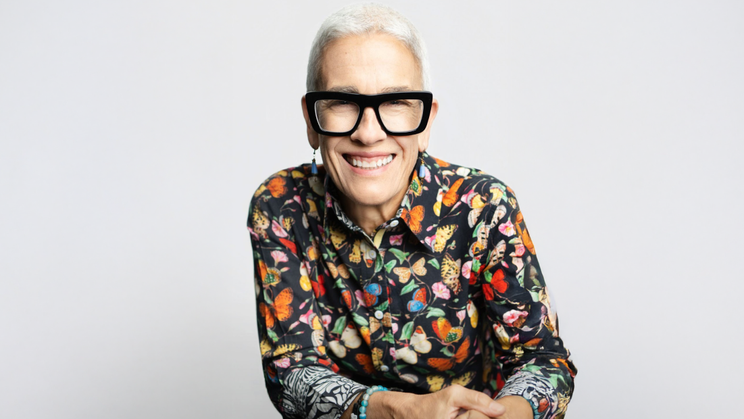
Patti Dobrowolski is a speaker, facilitator, and live illustrator who helps people draw their vision into reality. She has developed a process of visual goal and intention setting that helps people get specific about what they want and build a roadmap to move toward it.
“I used to believe that you create a vision board and put it somewhere and those things will just happen,” Dobrowolski explained. After a major career change, she found herself searching for direction. She took a large piece of paper and sketched out where she was in her life: the good, the bad, and the ugly.
Patterns quickly emerged: where she felt stuck, what wasn’t aligned, and what needed to change — making it easier to imagine what she wanted instead.
“I started by asking myself, ‘How do I want to feel as a person? What do I want to experience in the world?’” she said. It wasn’t about defining the future with rigid specificity, but about creating a felt sense of direction.
That personal exercise eventually evolved into Dobrowolski’s work helping others draw their future. And before anyone worries about artistic ability, she’s quick to reassure: the quality of the drawing isn't just secondary — it’s basically irrelevant.
Drawing, she explains, is more effective than clipping images for a traditional vision board because it’s a somatic process. “When you do it with your hand, it imprints more deeply in your hippocampus,” she said. “That’s what your brain remembers. Even if it’s a bad drawing, it helps bring things into focus.” It also begins to prime the brain’s reticular activating system, the network that helps determine what we notice, what we filter out, and what opportunities we’re able to recognize.
In today’s world, this approach can feel more resonant than a typical five-year plan. The issue isn’t ambition, but rigidity — goal-setting frameworks that don’t account for complexity, uncertainty, and change, the conditions modern leadership requires women to navigate.
Research supports the effectiveness of visual approaches like this. We retain information more effectively when it’s paired with imagery, and visualizing the future strengthens our connection to our future selves. Researchers have even linked it to lower procrastination and greater follow-through. Drawing also activates multiple neural networks at once, integrating emotion, memory, and problem-solving, rather than relying on language alone.
Ready to try the exercise yourself?
- Start by dividing a page into three sections. On the left, fill it with your current reality. Write and draw what’s going well alongside what’s challenging you. Then, get up and move around to shift your body chemistry, rather than staying stuck in what isn’t working.
- When you return, move to the right side of the page and sketch your desired future reality. “Imagine it’s one year from today in the best-case scenario,” she said. “In that world, how do you feel? Write three words that represent that.” From there, begin to draw specific things you want to see or experience. Focus on what you do want. Our brains tend to orient toward whatever they’re most focused on.
- The middle section of the page is where intention becomes action. Draw three arrows connecting your current reality to your desired one. These arrows represent three bold steps you could take to move forward. “Give each step an active verb,” Dobrowolski said. “That gets you moving.” Often, those steps fall into three categories: something that scares you, something tactical you need to do, and a mindset shift.
But the exercise doesn’t end with insight alone. From there, Dobrowolski encourages people to build a “tiny plan.” This isn’t about complicated KPIs, but a few simple milestones that make the goal feel tangible. “Then do one thing every day toward that future,” she said. “That’s the secret sauce.”
Those small, repeated actions matter because they tap into oxytocin, a hormone associated with trust, motivation, and psychological safety. When progress feels emotionally reinforcing — not just intellectually desirable — it becomes easier to continue day after day, rather than relying on willpower alone. Keeping the drawing somewhere visible helps strengthen that connection to your future self and reinforces the behaviors needed to move toward it.
Our brains are plastic, Dobrowolski explained, and the best way to train them is through repeat activity. That’s why both drawing your vision and keeping it visible are so important. One of the mechanisms behind this is the reticular activating system.
“Whenever your brain sees something it likes, it automatically creates a picture of it,” she said. “Then it sequences those pictures into a possible reality.” By pairing that mental imagery with action and focused emotional attention, you begin to create a path forward. “Your imagination network is powerful,” Dobrowolski added. “If you draw a picture, it expands what feels possible.”
This is what makes visual goal-setting fundamentally different from a New Year’s resolution. Instead of beginning with a declaration of discipline like “this year I will,” it starts with clarity: how you want to feel, what actually matters, and what kind of future you’re stepping toward.
By engaging emotion, imagination, and action, the process shifts goal-setting from an exercise in self-control to one of alignment. You’re not forcing change through sheer willpower; you’re training your brain to recognize opportunities, build momentum through small daily actions, and stay connected to the future you’re working toward.
The result isn’t a perfect plan, but a living roadmap — one that can evolve as circumstances change, while still giving you a clear way to set goals and build habits that last.