
Leading Through Transformation
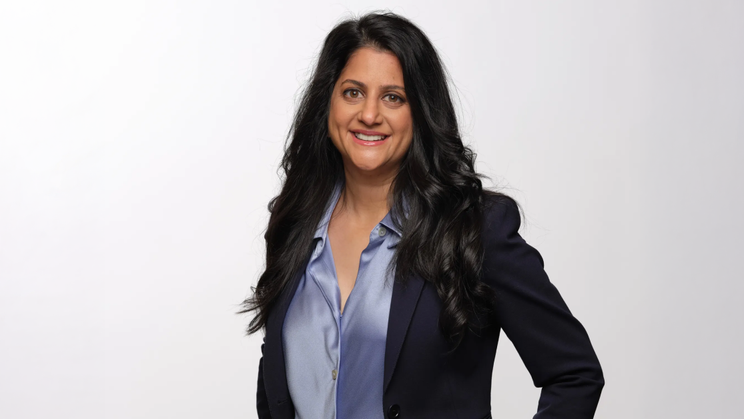
Guild CEO Bijal Shah stepped into her role in 2023 during a big moment of uncertainty. Rachel Romer, the founder of the education and skilling company, had suffered a stroke at age 34. Shah herself was out on parental leave, but she came back early to run the firm.
In the years since, she’s grown Guild’s customer base by 50%, forging new partnerships with Team USA and the LA28 Olympic Committee, breaking into sectors like manufacturing and health care, and expanded its product suite to keep pace with AI acceleration and address critical skills gaps.
We asked Shah — a winner of Chief’s 2025 New Era Of Leadership Awards — how this experience has shaped her as a leader, along with her advice for others who are leading teams through this moment of AI-fueled uncertainty and transformation.
You stepped into the CEO role at Guild in a big moment of uncertainty for the organization. What principles guide your decision-making when the path forward isn't clear?
Stepping into the CEO role during a time of disruption taught me that leadership in these moments is not about certainty. It is about creating the clarity and conditions that help others think clearly, act decisively, and stay grounded in purpose.
Adaptability has been my anchor. In moments when the path forward is not obvious, I focus on listening deeply, learning quickly, and fostering trust. I return to the principles that shape how we lead at Guild, especially customer centricity.
I felt the weight of that principle recently when a customer chose to leave. Churn is hard. It can be tempting to retreat or get defensive. But the more powerful choice is to get curious. What led to their decision? What signals did we miss? What could we have done differently? Where do we need to double down?
Instead of walking away, we kept showing up. We maintained the relationship. We supported the transition with care and accountability. As my coach Sue Heilbronner often reminds me, “Do not take your ball and go home.” Especially when things get hard.
Leadership in these moments is not about perfection. It is about staying connected to the people we serve, evolving with intention, and reinforcing the shared purpose that drives the work forward. Progress rarely happens in ideal conditions. It happens when people are trusted to think differently and supported to act boldly, especially when the future feels uncertain.
How did you make the decision to make this big move? What would your advice be to other women leaders about evaluating unexpected opportunities?
Stepping into the role of Guild’s CEO was a career change I never anticipated, but it was a transformational moment that reinforced the importance of building resilient companies with strong leadership at every level. Returning from maternity leave six weeks early was a decision driven by my responsibility to ensure continuity, not just for our team, but for the millions of workers we support. But more than anything, it proved that companies are not defined by any one leader, they are shaped by the strength of the teams behind them.
For other women leaders evaluating unexpected opportunities, my advice is this: Let your competencies and your curiosity guide you, not an arbitrary sense of whether the title is big enough or the timing is perfect. When I have made changes in my career, it has always been in pursuit of a new, complex problem that mattered, something I felt uniquely positioned to impact.
What have you learned about yourself as a persona and a leader in your two years as CEO? Has it changed your definition of success?
When I stepped into this role, it was during one of the most personal and vulnerable moments of my life. I was returning early from maternity leave, navigating postpartum recovery, and learning how to parent two young children, while stepping into one of the highest-stakes roles of my career.
The spotlight, understandably, landed on the company: the transition, the strategy, the business. But behind the scenes, something more personal was unfolding. I realized that if I wanted to build a durable company, I had to start by becoming a more durable version of myself.
That meant rethinking not just how I worked, but how I lived. How I managed my energy, how I made decisions, and how I showed up for others, starting with myself. I focused on sustainability over stamina. I traded the illusion of always-on grit for habits and systems that could support me for the long run.
Before 2025, I could not run a block. Last month, I completed a relay sprint triathlon. Not because I suddenly became an athlete, but because I gave myself permission to grow differently, to build strength, both personally and professionally, in ways that would last.
That shift has changed how I lead, how I build my team, and how I define success.
Success, for me, is no longer defined by title, or scope, or a single outcome. It is about staying in integrity with my purpose. It is about building systems that see people, unlock potential, and continue to function even when I step away.
At Chief, we love to say, “If you want to go fast, go alone. But if you want to go far, go together.” How has your own community impacted your journey as a leader?
That phrase has never felt more true than in this chapter of my life. When I stepped into this role, I did not do it alone. I stepped in with the quiet strength of my parents, who taught me that leadership is not about volume, but about values. I stepped in with the support of my husband, who reminded me to take it one day at a time when I was juggling a new chapter of motherhood and company-wide decisions. I stepped in with friends and family, who cooked meals, held my crying three-month old, and brought me coffee to help me stretch my energy a bit extra. And I stepped in with a team of Guilders who showed up with courage, clarity, and trust.
Leadership can feel lonely, but it should not be isolating. The moments that have shaped me most are the ones where peers challenged my thinking, mentors helped me zoom out, or colleagues gave me permission to be vulnerable. Those conversations are what helped me stretch beyond what I thought I was capable of. They grounded me when the pressure felt intense, and they reminded me that leadership is not about having all the answers, it is about asking the right questions with the right people beside you.
Guild’s skill-building programs help teams adapt to the future of work. As AI transforms the workplace, how should workers think about investing in their education when the half-life of skills seems to be shrinking?
Learning can no longer be treated as a one-time event. It has to be continuous, flexible, and directly connected to evolving needs. Workers should look for opportunities to build skill sets that evolve with their industries, and choose programs that offer real-world application.
The most resilient roles are not defined by technical capabilities alone, they are fueled by blended skill sets. Durable human strengths paired with evolving technical fluency. It is the combination that creates agility, and agility can carry workers, and businesses, through disruption.
Personally, I have found awareness to be one of the most essential capabilities: knowing when to push, when to pause, and how to bring steadiness. Curiosity remains my constant, helping me challenge assumptions and stay open to new information. And systems thinking has become critical, allowing me to see ripple effects, connect dots across functions, and make more intentional decisions.
The future of work will not be decided by algorithms, it will be shaped by the values and vision of those leading through it. The most enduring companies will be the ones that prioritize people development as much as product innovation. The leaders who will thrive in this next chapter are those who pair technological fluency with human depth, and who stay relentlessly committed to learning, evolving, and bringing others with them.
How do you believe women leaders specifically should be thinking about AI in terms of their current roles and their larger careers? What unique opportunities – and barriers – do you see?
All leaders are in a powerful position to shape how AI is integrated into their organizations, and that comes with both opportunity and responsibility.
AI is already influencing how decisions are made, how teams collaborate, and how work is distributed. At this inflection point, women in leadership roles have the ability to ensure AI is not just used efficiently, but also ethically and equitably. That means asking the harder questions: Who is being left out of the conversation? What assumptions are built into the tools we use?
One of the clearest opportunities is to lead AI integration in ways that center around people. That includes using it to enhance human judgment, improve access, and scale support. This work requires systems thinking, cross-functional insight, and emotional intelligence. These are strengths many women leaders already bring to the table. AI strategy is not only a technical challenge. It is also a leadership challenge. And it raises the same kinds of questions women are often already navigating: how to foster trust, how to lead across differences, how to adapt.
Women have long been underrepresented in emerging tech conversations, and there is a risk of history repeating itself. Without intentionality, organizations may overlook women in AI-focused reskilling and leadership development efforts. That is not just a missed opportunity for equity. It is a missed opportunity for innovation and performance.
My advice to women leaders is you do not need to be a technical expert to lead on AI. But you do need to use it, and master it, and know how your teams are thinking about it, and how it connects to your business strategy. Ask the questions others may not. Bring the lens others may not see. The future of work is being built in real time. Your leadership and perspective are essential to shaping it.
Leading Through Transformation
Leading Through Transformation