Member Voices
Writing the Next Playbook, Together
·5 min read
This month at Chief, we aren’t just celebrating Black history. We’re shining a spotlight on Black women who are redefining what it means to lead when changes to the world of work are impacting them disproportionately.
Members of Chief’s Black community are seeing and experiencing these changes in real-time: how shifts in policy, the dismantling of inclusion efforts, and mass layoffs are reshaping the workforce, particularly for Black women.
In response, they’re reinventing not just their own paths forward but also evolving the future of work looks like for the leaders following in their footsteps.
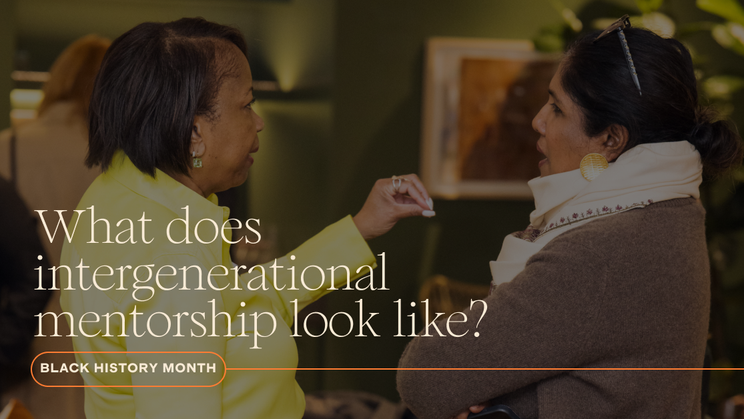
We asked Chief Members what intergenerational mentorship requires when the old playbook no longer applies. Read on for their advice.
1. Challenge each other’s perspectives.
“True leadership is about evolution, not stagnation. Intergenerational mentorships are no longer about passing down a fixed set of rules, especially when they are obsolete. I do not believe in hard and fast conventions or playbooks. There is duality in mentor/mentee relationships, both parties have life experiences that shape their perspective of the world; we can exchange ideas, impart wisdom, and challenge each other’s perceptions. Maintaining relevance is not about holding onto things from the past, but rather necessitates the ability to adjust and transform as business and life circumstances dictate without losing our authenticity, while also creating space for new ways of leading to emerge.”
Misty Johnson Oratokhai
Chief Operating Officer, National Children's Center, Inc
2. Trade wisdom across timelines.
“For me, Intergenerational mentorship looks less like passing down established rules and more like trading wisdom across timelines.
“When I came up in business, the playbook for Black women was: be twice/thrice as good, be careful, over-earn your seat, climb the ladder that already exists — strategically, relentlessly, but quietly and with humility. My daughter’s generation is saying: Respectfully…we’ll build our own playbook — please and thank you. And why not? They’re highly educated, spiritually grounded, creatively fearless — and no longer willing (or having) to wait for tired traditions, closed networks, or unnecessary permission to validate their gifts. Still strategic; still relentless — they burn the old blueprint and call it innovation. They design their own ladders.
“So, my mentorship has to evolve. Yes, I still offer the tried and true “how to survive the room” tools: discernment, receipts, courage, boundaries, tone, choosing battles, etc... But now, I also have to mentor with a generosity of spirit — allowing younger leaders to also mentor me in the authenticity, visibility, and joy they've embraced.
“The ‘new’ mentorship model is a mutual one: I help protect their light. They help expand my imagination.”
Lesleigh Irish-Underwood
Chief Marketing & Development Officer (Fractional), Chief Outsiders
3. Don’t pass a baton, build a bridge.
“Intergenerational mentorship today looks less like passing a baton and more like building a bridge. Senior Black women leaders offer hard-won wisdom from navigating spaces that weren’t built for us, while younger leaders bring new frameworks and a refusal to inherit outdated limits. Mentorship is reciprocal, a shared effort to expand what leadership can be.”
Jenn Wells
Chief of Staff, UCLA Alumni Engagement
4. Move beyond mentorship.
“The challenges that senior Black women leaders faced a decade ago still apply in far too many fields and industries. We need sponsorship, not mentorship, that transcends generations and communities. Mentors walk you to the door, sponsors open it.”
Phoenix Ricks
CEO, Girl Friday
5. Embrace an abundance mindset.
"Intergenerational mentorship means embracing the abundance mindset younger Black women leaders operate from — celebrating multiple voices at the table rather than the scarcity I navigated where there could only be 'one of us' in the room. My generation absorbed the narrative that 'paying dues' meant working in shadows, unpaid and uncredited, building relationships over years through proximity alone. Today's leaders rightfully reject that framework. They refuse to code-switch, measure success by impact and purpose alignment, and leverage technology I use daily but didn't have access to while climbing the ladder. Rather than dwelling on 'You don't understand what we faced,' I channel energy toward equipping them for obstacles they do face: managing digital burnout, leading authentically while protecting boundaries, and building sustainable careers in a world demanding constant adaptation. My role isn't to impose my timeline but to offer wisdom about endurance and resilience while meeting them where they are. What excites me most is witnessing them build their own tables, livestream the conversations, and create new power structures on their own terms. And it’s beautiful to behold!"
Teresa Chapman, MDR, PHR
Chief People Officer, Santa Clara Family Health Plan
6. Shift from ‘this is how you survive’ to ‘this is how you decide.’
“To me, intergenerational mentorship looks less like passing down a fixed set of rules and more like mutual translation. The paths senior leaders navigated, often grounded in formality, were effective in their time, but many of those conditions no longer exist in the same way. At the same time, the newer playbooks being written today — more transparent and less hierarchical — still benefit from historical context and institutional memory.
“The most effective mentorship I see now is bi‑directional. Senior leaders bring perspective on judgment, credibility, and how to lead through ambiguity and scrutiny. Younger professionals bring fluency in new ways of influencing, communicating, and challenging systems that may no longer serve the organization — or its people. Neither approach is sufficient on its own.
“For me, mentorship works when it shifts from ‘this is how you survive’ to ‘this is how you decide.’ The goal isn’t to replicate past strategies or blindly adopt new ones, but to help each other develop discernment: when to follow precedent, when to push change, and how to do both with integrity. Intergenerational mentorship isn’t about choosing which playbook is right — it’s about co‑authoring the next one.
Joquese Satterwhite
Divisional Vice President Ethics & Compliance Officer RMDx, Abbott